
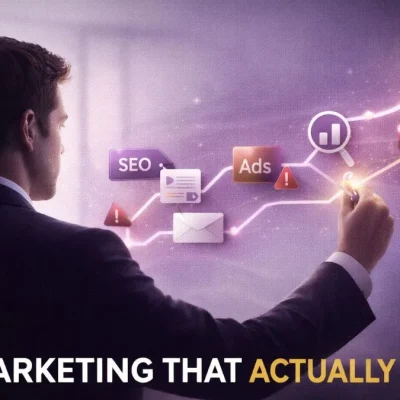

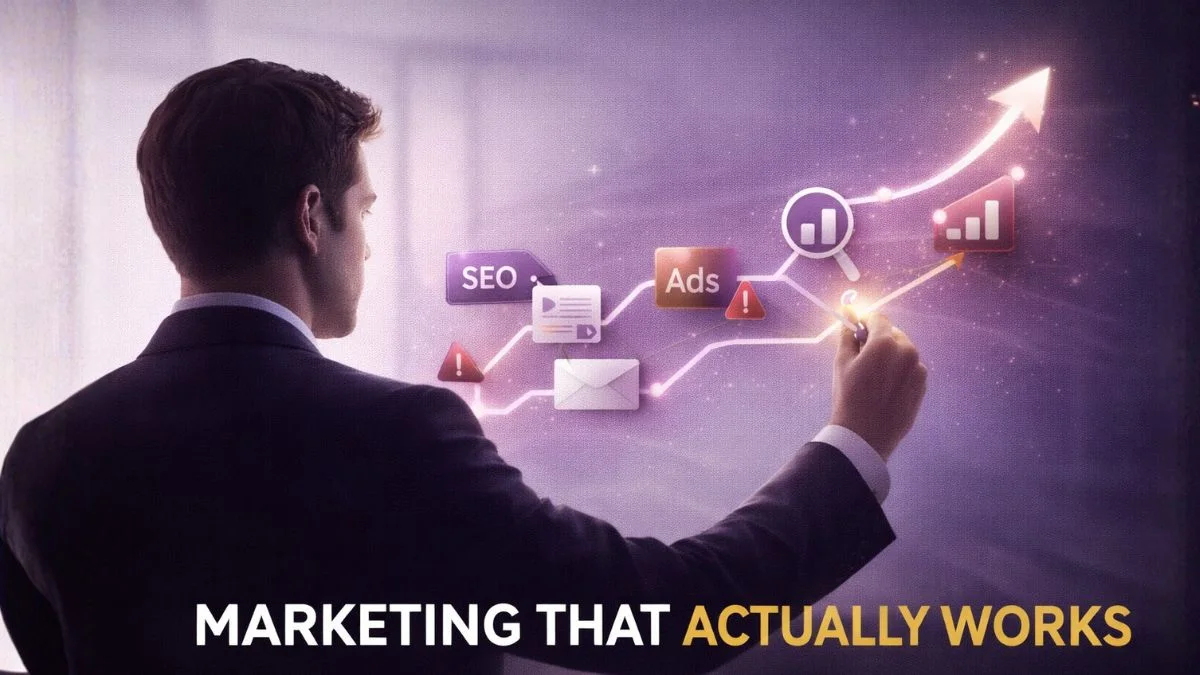
Most businesses believe they have a strategy. In reality, they have activities.
Social media posts. Ads. SEO efforts. A website refresh. Yet results remain inconsistent, unpredictable, or completely absent. This gap exists because execution without structure is not a digital marketing strategy—it’s guesswork.
Understanding what makes a digital marketing strategy actually work is the difference between short-term noise and long-term growth.
Quick Content Map: What You’ll Learn
- What defines a working digital marketing strategy
- Why most strategies fail before execution
- The core components of an effective framework
- How professionals turn strategy into results
- When full-service support becomes essential
- How to build momentum the right way
Why This Topic Matters for Business Growth
Digital marketing has matured. Competition has increased. Costs are rising.
Without an effective digital marketing strategy, businesses:
- Waste budget on disconnected channels
- Attract traffic that doesn’t convert
- Struggle to scale beyond referrals
Research consistently shows that companies using a documented, data-led approach outperform those relying on tactics alone.
This challenge impacts everyone—from startups working with a digital marketing agency in Jaipur, to growing brands across India, to companies collaborating with teams worldwide.
What a Digital Marketing Strategy Is (And Isn’t)
A digital marketing strategy is not:
- A content calendar
- A list of platforms
- A paid ads plan
A real strategy is a decision-making system that defines:
- Who you target
- What problem you solve
- Where attention is captured
- How trust is built
- How conversions happen
This foundation determines whether marketing efforts compound or collapse.
The Core Elements That Make a Digital Marketing Strategy Work
- Clear Business Objectives
Every marketing strategy framework starts with clarity.
Working strategies align marketing with:
- Revenue goals
- Lead quality targets
- Brand positioning
- Growth timelines
Without this, metrics become meaningless.
- Audience & Intent Mapping
An effective digital marketing strategy is built around intent, not assumptions.
This includes:
- Identifying buyer stages
- Understanding search behavior
- Mapping content to decision points
This is why SEO, content, and ads must work together—not separately.
- Strong Brand & Messaging Foundation
If your message doesn’t land, strategy breaks.
High-performing strategies invest in:
- Clear positioning
- Consistent visual identity
- Trust-driven communication
This is where strong branding and visuals make the difference—often supported through professional graphic design services that build trust instantly.
- Conversion-Focused Infrastructure
Traffic without conversion is wasted effort.
A conversion-focused marketing strategy depends on:
- Fast, intuitive websites
- Clear calls-to-action
- Funnel-based user journeys
Many strategies fail simply because the website isn’t built to convert, which is why website design and development becomes essential for long-term growth.
- Channel Integration (Not Channel Obsession)
What makes a scalable digital marketing strategy work is integration.
Successful strategies connect:
- Search (SEO & paid)
- Content marketing
- Social platforms
- Email & remarketing
Each channel supports the same goal—not separate agendas.
A Simple Framework to Evaluate Your Strategy
To assess whether your digital marketing strategy works, review these pillars:
- Clarity – Are goals and outcomes defined?
- Consistency – Is messaging aligned everywhere?
- Data – Are decisions based on performance metrics?
- Optimization – Is the strategy evolving with insights?
Most underperforming strategies lack at least two of these.
Common Strategy Mistakes Businesses Make (Very Important)
These errors quietly sabotage results:
- Confusing tools with strategy
- Copying competitors without context
- Over-investing in ads before foundations
- Ignoring long-term brand building
- Working without a digital marketing partner
These mistakes don’t always fail fast—but they prevent sustainable growth.
How Professionals Turn Strategy Into Results
A professional digital marketing agency doesn’t just plan—it systems.
Working strategies are powered by:
- Research-backed planning
- Data-driven digital marketing decisions
- Cross-functional collaboration
- Continuous testing and refinement
That’s why businesses that invest in structured digital marketing services experience clearer momentum, accountability, and predictable results.
Independent research continues to confirm that sustainable business growth comes from integrated systems, not scattered tactics—something backed by ongoing digital growth research.
When Full-Service Strategy Support Makes Sense
A full-service digital marketing agency becomes essential when:
- Marketing efforts feel disconnected
- Internal teams lack strategic leadership
- Growth goals require scale and consistency
- Brand, content, ads, and website must align
Instead of managing multiple vendors, businesses gain one accountable digital marketing team driving unified execution.
How to Start Building a Strategy That Works
Start with intention—not urgency.
A strong reset begins by:
- Auditing your current marketing efforts
- Identifying the weakest conversion point
- Defining realistic growth objectives
You may also find deeper insight in our related blog on why most businesses struggle with digital marketing results.
When you’re ready, booking a free strategy call can help you identify what’s missing and build momentum with clarity.
Conclusion: Strategy Works When It’s Built to Convert
A digital marketing strategy works when it’s:
- Goal-driven
- Audience-led
- Conversion-focused
- Continuously optimized
Without structure, marketing feels expensive.
With the right strategy, growth becomes predictable.
Frame your growth with intention.Talk to our digital team when clarity matters most—reach out through our Contact Page to get started.
